The following text was first presented at Neurosis, Poetry, and the Present, a workshop organized by Daniel Katz and Benjamin Noys at CPCT on 18 March 2017.
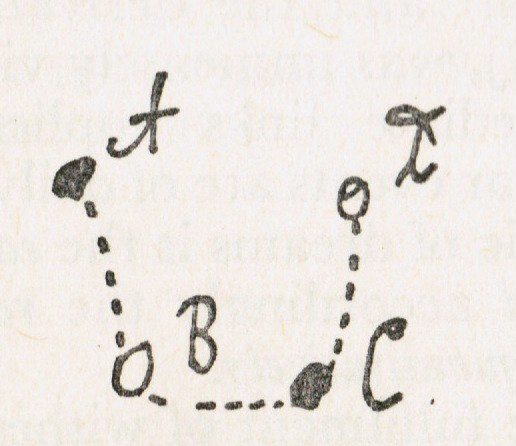
Critical vulnerability and the weakness of poetry
Emma Mason (University of Warwick)


The following text was first presented at Neurosis, Poetry, and the Present, a workshop organized by Daniel Katz and Benjamin Noys at CPCT on 18 March 2017.
Critical vulnerability and the weakness of poetry
Emma Mason (University of Warwick)
The following text was first presented at Neurosis, Poetry, and the Present, a workshop organized by Daniel Katz and Benjamin Noys at CPCT on 18 March 2017.
Introduction:
The Time of Neurosis
Benjamin Noys (2017)
 Call for Papers
Keynote Speaker: Professor Peter Fenves, Northwestern University
Deadline for abstracts: 20 April 2017
‘The idea is a monad—that means briefly: every idea contains the image of the world’, writes Walter Benjamin in The Origin of the German Mourning Play. ‘Expression’, in the writing of Gottfried Wilhelm Leibniz, denotes an isomorphic relation between the universe and its components, or monads. Every monad contains an image, or reflection of the universe; ‘each simple substance has relations which express all the others, and (…) consequently it is a perpetual living mirror of the universe (§56, Monadology). This conference seeks to reanimate Benjamin’s encounter with Leibniz, and considers, particularly, the manner in which Leibniz’s concept of expression informs Benjamin’s thought.
As Gilles Deleuze writes in Expressionism in Philosophy: Spinoza, the concept of expression, rediscovered by Spinoza and Leibniz, ‘already had behind it a long philosophical history, but a rather hidden, and a rather forbidden history’. Walter Benjamin’s engagement with Leibniz’s philosophy was an enduring one as well. Explicit references to Leibniz’s philosophy may be found from Benjamin’s doctoral dissertation on early German romanticism to his final text, the ‘Theses on the Philosophy of History’. Yet the Leibniz-Benjamin encounter might be considered a hidden one too, and—from the dearth of critical commentary on the subject—the scope of Leibniz’s influence on Benjamin may appear equally forbidding. Whence the furtive nature of those themes appropriated from Leibniz in Benjamin’s writing, and to what extent might ‘expression’ be the sign under which less visible dimensions of such themes can, paradoxically, be made legible?
Both the concept of expression—as a point of convergence between the philosophy of Leibniz and Benjamin—and its bearing upon their philosophy more generally, have gone underinvestigated. This conference will bring together researchers working on different aspects of expression in Benjamin and Leibniz’s philosophy. The workshop—to be held on the following day—will offer participants an opportunity to read texts by Leibniz, Benjamin and others, and to investigate the role played by the themes of expression and monadology in and between disciplines in the 20th and 21st centuries.
We welcome papers on a range of topics including but not limited to:
* The role of the Monadology in Benjamin’s ‘philosophy of ideas’ and philosophy of language
* Between expression (Ausdruck) and perception (Wahrnehmung) in Walter Benjamin’s writing
* The place of Leibniz in Benjamin’s encounter with Romanticism
* Leibniz’s concept of expression in Benjamin’s philosophy of history
* The concept of expression between Leibniz, Deleuze and Benjamin
* Monadic/expressive use of philosophical terminology in Benjamin
* Benjamin’s disputations with infinitesimal calculus
* Leibniz’s concept of expression and Benjamin’s writing on poetics
* The ‘virtual’ in Leibniz; virtuality in Benjamin and Derrida
* Leibniz, Benjamin and theories of the coming philosophy
* Logical expression, historical expression: Benjamin’s responses to Cohen
Proposals (250-300 words) for 20 minute long papers, accompanied by a brief biographical note (100 words) should be submitted to onexpressionwblrn@gmail.com by April 20th, 2017.
Organization: Noa Levin / Christopher Law
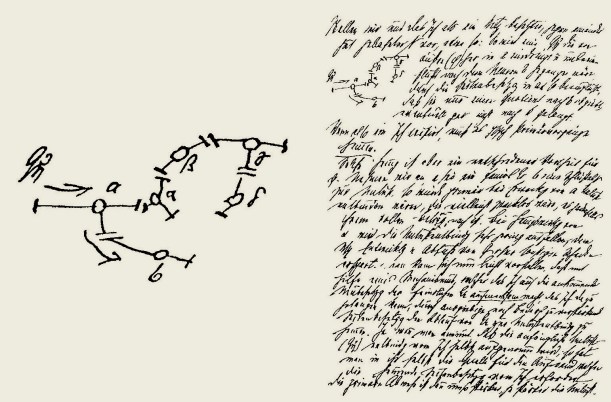
The current theoretical scene has often swung between invocations of affirmative joy and melancholic meditations. This oscillation is figured in the assumption of a joyous continuity between philosophy and politics, or the melancholy and chastened consideration of their sundering. Instead, this event focuses on neurosis as a missing term, a form of ‘blockage’, of delay and prevarication, which could open-up the tensions of the present moment. In particular this also involves a re-consideration of poetry as a site that has witnessed a resurgence in political engagement and the thinking through of the damaged subjectivities of contemporary capitalism. Poetry, often dismissed under the signs of neurosis or of lack of relevance or popularity, offers another ‘minor’ site for interrogating the theoretical and political moods and affects of the present moment. This unstable combination of neurosis and poetry is a deliberately fragile construction that we hope can allow the exploration of the fragilities of our subjectivities and experiences.
SCHEDULE
10:45-11:00 am – Introduction
11:00-12:00 pm – Professor Emma Mason (Warwick): “Critical Vulnerability and the Weakness of Poetry”
12:15-1:15 pm – Professor Daniel Katz (Warwick): “Real Ruins: Modernist Neurosis, Impersonal Politics”
1:15-2:45 pm – Lunch
2:45-3:45 pm – Dr. Natalia Cecire (Sussex): “The Cell, the Shell, and the Death Drive: Marianne Moore and the Open Secrets of the Natural World”
4:00-5:00 pm – Professor Benjamin Noys (Chichester): “The Cosmogony of Revolution: Diane di Prima’s Revolutionary Letters and Anti-Neurosis”
5:15-6:15 pm – Roundtable
PRELIMINARY READINGS
(For PDFs copies please visit https://www.dropbox.com/sh/ll0vsfxjzmxq0yr/AACeRSwFZ9905X6cwPV42Kusa?dl=0)
Berardi, Franco, The Uprising: On Poetry and Finance (Semiotext(e), 2012).
Carson, Anne, “Gnosticisms,” in Decreation (New York: Vintage Books, 2006)
Noys, Benjamin, ‘Long Live Neurosis!’ (2016): https://www.academia.edu/27780212/Long_Live_Neurosis_
Katz, Daniel, “‘I did not walk here all the way from prose’: Ben Lerner’s virtual poetics”, Textual Practice online, 24 March 2016: http://www.tandfonline.com/doi/full/10.1080/0950236X.2015.1119987
Lysack, Krista, ‘The Productions of Time: Keble, Rossetti and Victorian Devotional Reading’, Victorian Studies, 55.3 (2013), 451-470.
Sedgwick, Eve Kosofsky, “Paranoid Reading and Reparative Reading, Or, You’re So Paranoid, You Probably Think This Essay Is About You,” in Touching Feeling: Affect, Pedagogy, Performativity, ed. by Adam Frank, 123-51. Series Q. Durham: Duke University Press, 2003.
Seltzer, Mark, The Official World (Duke University Press, 2016).
Vattimo, Gianni, “The Shattering of the Poetic Word,” in The End of Modernity: Nihilism and Hermeneutics in Postmodern Culture (Baltimore: Johns Hopkins, 1988, orig. in Italian, 1985).
Taussig, Michael T. Defacement: Public Secrecy and the Labor of the Negative. Stanford, Calif.: Stanford University Press, 1999.
Contact: j.ng[at]gold.ac.uk

The prologue to Walter Benjamin’s Trauerspiel book, written between 1923-25 and published in 1928, takes up a pivotal position in his work. More than a mere introduction, the text is a culmination and summary presentation of the philosophical concepts that Benjamin had begun to develop systematically at least since his early reflections on language of 1916 – the same year in which he had drafted the first outlines for his later book. In its attempt to articulate a new form of historico-philosophical interpretation, the text arguably serves as a point of transition between the metaphysics of the early writings and the materialist conception of history that would inform the later work. Even though the significance of the Vorrede has been consistently acknowledged by commentators, its dense and often forbidding prose has continued to puzzle readers. In this two-day event, we will undertake a close reading of a selection of key excerpts from the text, focusing on a number of philosophical concepts that will continue to play a crucial role in Benjamin’s work well beyond the Trauerspiel book: Presentation, Truth, Idea, Constellation, Name, Origin, and Monad. True, if only in their infidelity, to Benjamin’s recognition of language’s unruly relation to intention, such concepts simultaneously enact and resist philosophical closure, including the kind that would guarantee their privileged status as points of transition between metaphysics and materialism. Throughout these two days, then, we hope to shed light on Benjamin’s persistent concern with philosophy – a concern that is always at the same time an attempt to problematise the philosophical enterprise as such.
If you wish to participate, please send an email to tvand049@gold.ac.uk before January 11 to receive the required readings.
Organised by Tom Vandeputte and Christopher Law
Reading sessions chaired by Mijael Jiménez, Christopher Law, Noa Levin, Florence Platford, Sebastian Truskolaski, Tom Vandeputte

29 Nov 2016 5:30pm – 7:00pm
144, Richard Hoggart Building
Explore the work of Latin America’s foremost Marxist thinker with one of his most acute interpreters
Mariátegui is not only the most important Marxist thinker of Latin America, but an author who can be compared to some of the greatest European Marxist thinkers of the 1920’s (the young Gramsci, Walter Benjamin, Ernst Bloch). The key innovation of his heterodox Romantic interpretation of Marxism is the concept of “Inca communism” and the emphasis on indigenous communitarian traditions for the development of a modern socialist strategy for Peru and Latin America.

** PLEASE NOTE: Due to personal reasons Professor Hamacher is no longer able to come to London, and the seminar has been cancelled. The workshop on Friday 2 December will still take place.
Prof. Werner Hamacher will lead a seminar on his essay, “The Gesture in the Name: On Benjamin and Kafka” (from Premises) / “Die Geste im Namen” (from Entferntes Verstehen), in Richard Hoggart Building 256 at Goldsmiths, University of London.
Prof. Hamacher asks all participants to please read the text and prepare questions for him in advance of the seminar. (Click here for English translation; German original)
All welcome; seats available on a first come, first served basis.
Contact: j.ng [at] gold.ac.uk
An interdisciplinary workshop on the philosophic, literary, art historical “language of gestures,” with special attention to the work of Walter Benjamin and Giorgio Agamben.
Participants: Andrew Benjamin (London Graduate School / Kingston University / Monash University), Philipp Ekardt (Warburg Institute / Bilderfahrzeuge Project), Christopher Johnson (Warburg Institute / Bilderfahrzeuge Project), David Freedberg (Warburg Institute), Werner Hamacher (European Graduate School), Eckart Marchand (Warburg Institute / Bilderfahrzeuge Project), Julia Ng (Goldsmiths, University of London), Caroline van Eck (University of Cambridge).
The Workshop on Gesture addresses a truly interdisciplinary topic currently being explored by scholars from art history, dance studies, cinema studies, and philosophy. Drawing on research in ethnology, anthropology, psychology, and neuropsychology, art historians, like Aby Warburg, Rudolf Wittkower, Caroline van Eck, and David Freedberg, have variously redescribed and theorized gesture. Philosophers and literary theorists, like Walter Benjamin, Bertolt Brecht, Giorgio Agamben, Judith Butler, Werner Hamacher, and Andrew Benjamin, have plumbed gesture for its ability to mediate meaning(s). Given this, the Workshop will variously attempt to revaluate the corporeality, contingency, and temporality that enable gesture in the first place, even as it assesses the various ways gesture has been, for better or worse, abstracted. Its working premise is that nowadays we see a gradual fading of the symbol in the face of other forms of mediation, and that this lends urgency to the study of gesture. More particularly still, the Workshop will attempt to trace the lines that join gesture in life, on stage, and in the visual arts and the conceptions of gesture promoted by Walter Benjamin and Giorgio Agamben.
This Workshop, then, affords an opportunity, then, to address questions such as: How might a history of gesture be written? What kinds of aesthetic, rhetorical, and/or truth claims does gesture make? In what sense is gesture an event, a sign, or a form of expression? What are the qualitative and conceptual differences between gestures that occur in the laboratory, a play, a painting, or on a page of philosophy? To address such questions, the Workshop will consider the dynamics of producing and receiving gesture as a historical, empirical, and philosophic problem.
Program:
10:00 Christopher Johnson (WI/BFZ), Welcome: Some Gestures towards Gesture
10:20 Caroline van Eck (University of Cambridge), “Eloquentia corporis as a Theory of Mind: Intentionality and Inanimate Movement”
11:05 Eckart Marchand (WI/BFZ), “Baxandall meets Belting: Gestures in Fifteenth-Century Florentine Paintings”
11:50 Philipp Ekardt (WI/BFZ), “Gesture and Discernment: The Power of Feelings according to Alexander Kluge”
12:35 Lunch
1:30 David Freedberg (WI), “The Paradox of the Pathosformel”
2:15 Julia Ng (Goldsmiths), “Sketching the Sky Torn Asunder: Gesture in Benjamin’s Kafka”
3:00 Coffee, tea break
3:15 Andrew Benjamin (London Graduate School, Kingston University), “Empathy and the Doubling of Gesture”
4:00 Roundtable discussion, led by Josh Cohen (Goldsmiths)
If you wish to attend please register by clicking here.
Contact: johnson [at] bilderfahrzeuge.org
The Centre for Philosophy & Critical Thought and the Political Economy Research Centre are delighted to announce two talks by philosopher Justin E. H. Smith, Université Paris Diderot. Smith is author of The Philosopher: A History in Six Types andNature, Human Nature, and Human Difference: Race in Early Modern Philosophy. All are welcome and there is no need to register.
23rd November
6-7.30pm
Room 220, Education Building
As many know, domination is at the heart of Leibniz’s theory of monads, in which simple substances enter into infinitely complex hierarchical relations of domination and subordination as a result of the varying degrees of clarity in their perceptions. Clearer perception at the monadic level translates into a greater capacity for domination, and in turn, at the phenomenal bodily level, into a capacity for action. But does this analysis of domination carry over into Leibniz’s political thought? I would like to consider some evidence that it does.Readings from: Consilium Aegyptiacum (1671); ‘Meditation on the Common Concept of Justice’ (1702).
24th November
5.30-7pm
Room 309, Richard Hoggart Building
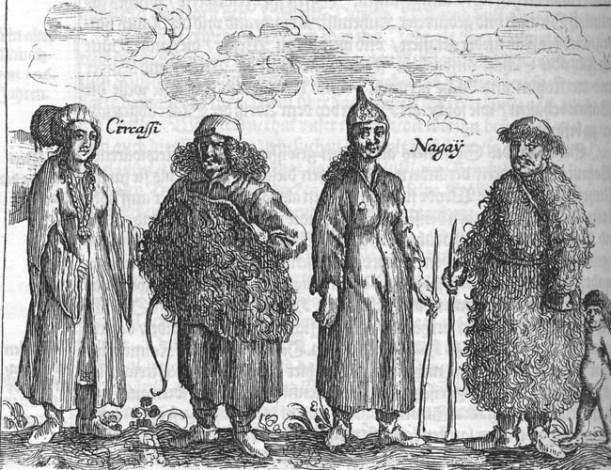
In his 1762 Émile, ou De l’éducation, Jean-Jacques Rousseau criticises those philosophers who “will love the Tartars in order to avoid loving their neighbour.” The ethnic group in question would be more correctly called the ‘Tatars’, a wide family of Turkic groups living throughout the broader Black Sea region, and often invoked by Western Europeans in the Enlightenment as a stock example of savage peoples. Rousseau’s critique here is directed at those cosmopolitan thinkers who turn their attention away from the concrete human reality that surrounds them, and towards what he sees as abstractions and fantasies of what human beings are like, or could be like, in far-away settings that we, here in 18th-century Geneva, will never encounter. But there are two possibilities that may have escaped Rousseau’s attention. These are, namely, that the neighbours are themselves Tartars, and that the Tartars are themselves philosophers. According to the stereotype that makes Rousseau’s example work, Tartars are by definition far away, and by definition unphilosophical. But why suppose as much? In this talk, I will draw on themes developed in my recent book, The Philosopher: A History in Six Types (2016), in order to answer this question.
Powers and Limits of Property Workshop – Session 2
Chair: Alain Pottage
José Bellido and Kathy Bowrey – Licensing Gone Wrong
Hyo Yoon Kang – When Intellectual Property Becomes Speculative: A Study of Patents as Financial Instruments
[NB: unfortunately Bellido and Bowrey’s paper was not recorded]
Powers and Limits of Property – Session 1
Chair: Julia Ng
Robert Nichols – Dispossession: A Conceptual Reconstruction
Brenna Bhandar and Alberto Toscano – Race, Real Estate and Real Abstraction
Eyal Weizman – The Conflict Shoreline
 The Centre for Philosophy and Critical Thought, Goldsmiths University of London