The Centre for Philosophy and Critical Thought, Goldsmiths University of London

Research Centre run jointly between the Departments of Sociology and English and Comparative Literature at Goldsmiths University, London


Leave a comment

Gesture: A Seminar and Workshop with Werner Hamacher (WBLRN / Warburg Institute), 1-2 Dec 2016

gesture-poster

Thursday, 1 December 2016 – A Seminar with Werner Hamacher

4-6pm, Richard Hoggart Building 256, Goldsmiths

** PLEASE NOTE: Due to personal reasons Professor Hamacher is no longer able to come to London, and the seminar has been cancelled. The workshop on Friday 2 December will still take place.

Prof. Werner Hamacher will lead a seminar on his essay, “The Gesture in the Name: On Benjamin and Kafka” (from Premises) / “Die Geste im Namen” (from Entferntes Verstehen), in Richard Hoggart Building 256 at Goldsmiths, University of London. 

Prof. Hamacher asks all participants to please read the text and prepare questions for him in advance of the seminar. (Click here for English translation; German original

All welcome; seats available on a first come, first served basis.

Contact: j.ng [at] gold.ac.uk

Friday, 2 December 2016 – A Workshop

9:30am-6pm, Lecture Room, The Warburg Institute

An interdisciplinary workshop on the philosophic, literary, art historical “language of gestures,” with special attention to the work of Walter Benjamin and Giorgio Agamben.

Participants: Andrew Benjamin (London Graduate School / Kingston University / Monash University), Philipp Ekardt (Warburg Institute / Bilderfahrzeuge Project), Christopher Johnson (Warburg Institute / Bilderfahrzeuge Project), David Freedberg (Warburg Institute), Werner Hamacher (European Graduate School), Eckart Marchand (Warburg Institute / Bilderfahrzeuge Project), Julia Ng (Goldsmiths, University of London), Caroline van Eck (University of Cambridge).

** PLEASE NOTE: Due to personal reasons Professor Hamacher is no longer able to attend the workshop.

The Workshop on Gesture addresses a truly interdisciplinary topic currently being explored by scholars from art history, dance studies, cinema studies, and philosophy. Drawing on research in ethnology, anthropology, psychology, and neuropsychology, art historians, like Aby Warburg, Rudolf Wittkower, Caroline van Eck, and David Freedberg, have variously redescribed and theorized gesture. Philosophers and literary theorists, like Walter Benjamin, Bertolt Brecht, Giorgio Agamben, Judith Butler, Werner Hamacher, and Andrew Benjamin, have plumbed gesture for its ability to mediate meaning(s). Given this, the Workshop will variously attempt to revaluate the corporeality, contingency, and temporality that enable gesture in the first place, even as it assesses the various ways gesture has been, for better or worse, abstracted. Its working premise is that nowadays we see a gradual fading of the symbol in the face of other forms of mediation, and that this lends urgency to the study of gesture. More particularly still, the Workshop will attempt to trace the lines that join gesture in life, on stage, and in the visual arts and the conceptions of gesture promoted by Walter Benjamin and Giorgio Agamben.

This Workshop, then, affords an opportunity, then, to address questions such as: How might a history of gesture be written? What kinds of aesthetic, rhetorical, and/or truth claims does gesture make? In what sense is gesture an event, a sign, or a form of expression? What are the qualitative and conceptual differences between gestures that occur in the laboratory, a play, a painting, or on a page of philosophy? To address such questions, the Workshop will consider the dynamics of producing and receiving gesture as a historical, empirical, and philosophic problem.

Program:

10:00 Christopher Johnson (WI/BFZ), Welcome: Some Gestures towards Gesture

10:20 Caroline van Eck (University of Cambridge), “Eloquentia corporis as a Theory of Mind: Intentionality and Inanimate Movement”

11:05 Eckart Marchand (WI/BFZ), “Baxandall meets Belting: Gestures in Fifteenth-Century Florentine Paintings”

11:50 Philipp Ekardt (WI/BFZ), “Gesture and Discernment: The Power of Feelings according to Alexander Kluge”

12:35 Lunch

1:30 David Freedberg (WI), “The Paradox of the Pathosformel”

2:15 Julia Ng (Goldsmiths), “Sketching the Sky Torn Asunder: Gesture in Benjamin’s Kafka”

3:00 Coffee, tea break

3:15 Andrew Benjamin (London Graduate School, Kingston University), “Empathy and the Doubling of Gesture”

4:00 Roundtable discussion, led by Josh Cohen (Goldsmiths)

If you wish to attend please register by clicking here.

Contact: johnson [at] bilderfahrzeuge.org

Event page at the Warburg institute.


Leave a comment

Two talks by Justin E.H. Smith on Leibniz and Domination / Philosophers and Neighbours

tartars

The Centre for Philosophy & Critical Thought and the Political Economy Research Centre are delighted to announce two talks by philosopher Justin E. H. Smith, Université Paris Diderot. Smith is author of The Philosopher: A History in Six Types andNature, Human Nature, and Human Difference: Race in Early Modern Philosophy. All are welcome and there is no need to register.

Leibniz on Political and Metaphysical Domination

23rd November

6-7.30pm

Room 220, Education Building

As many know, domination is at the heart of Leibniz’s theory of monads, in which simple substances enter into infinitely complex hierarchical relations of domination and subordination as a result of the varying degrees of clarity in their perceptions. Clearer perception at the monadic level translates into a greater capacity for domination, and in turn, at the phenomenal bodily level, into a capacity for action. But does this analysis of domination carry over into Leibniz’s political thought? I would like to consider some evidence that it does.Readings from: Consilium Aegyptiacum (1671); ‘Meditation on the Common Concept of Justice’ (1702).

Philosophers, Neighbours, and Tartars

24th November

5.30-7pm

Room 309, Richard Hoggart Building

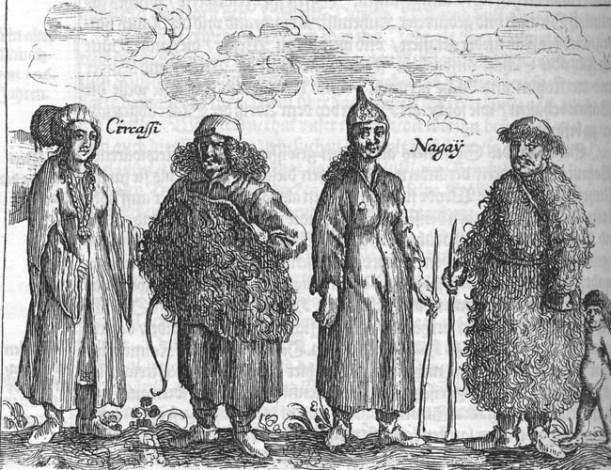
In his 1762 Émile, ou De l’éducation, Jean-Jacques Rousseau criticises those philosophers who “will love the Tartars in order to avoid loving their neighbour.” The ethnic group in question would be more correctly called the ‘Tatars’, a wide family of Turkic groups living throughout the broader Black Sea region, and often invoked by Western Europeans in the Enlightenment as a stock example of savage peoples. Rousseau’s critique here is directed at those cosmopolitan thinkers who turn their attention away from the concrete human reality that surrounds them, and towards what he sees as abstractions and fantasies of what human beings are like, or could be like, in far-away settings that we, here in 18th-century Geneva, will never encounter. But there are two possibilities that may have escaped Rousseau’s attention. These are, namely, that the neighbours are themselves Tartars, and that the Tartars are themselves philosophers. According to the stereotype that makes Rousseau’s example work, Tartars are by definition far away, and by definition unphilosophical. But why suppose as much? In this talk, I will draw on themes developed in my recent book, The Philosopher: A History in Six Types (2016), in order to answer this question.


Leave a comment

Recording of Powers and Limits of Property workshop (11 June 2015) – Part 2

Powers and Limits of Property Workshop – Session 2

Chair: Alain Pottage
José Bellido and Kathy Bowrey – Licensing Gone Wrong
Hyo Yoon Kang – When Intellectual Property Becomes Speculative: A Study of Patents as Financial Instruments
[NB: unfortunately Bellido and Bowrey’s paper was not recorded]

www.gold.ac.uk/calendar/?id=8799


Leave a comment

Recording of Powers and Limits of Property workshop (11 June 2015) – Part 1

Powers and Limits of Property – Session 1

Chair: Julia Ng
Robert Nichols – Dispossession: A Conceptual Reconstruction
Brenna Bhandar and Alberto Toscano – Race, Real Estate and Real Abstraction
Eyal Weizman – The Conflict Shoreline

www.gold.ac.uk/calendar/?id=8799


Leave a comment

Michael Löwy – The Romantic Marxism of José Carlos Mariátegui (29 Nov 2016)

image

Explore the work of Latin America’s foremost Marxist thinker with one of his most acute interpreters

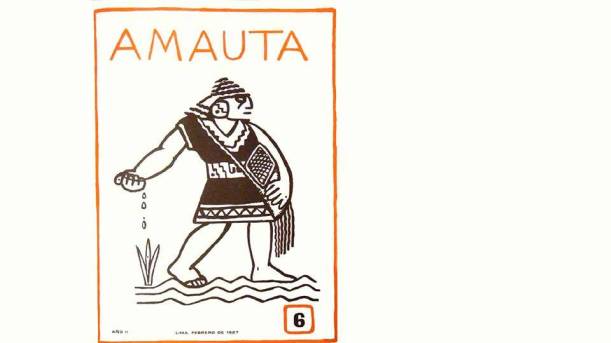
Mariátegui is not only the most important Marxist thinker of Latin America, but an author who can be compared to some of the greatest European Marxist thinkers of the 1920’s (the young Gramsci, Walter Benjamin, Ernst Bloch). The key innovation of his heterodox Romantic interpretation of Marxism is the concept of “Inca communism” and the emphasis on indigenous communitarian traditions for the development of a modern socialist strategy for Peru and Latin America.

Michael Löwy is Research Director of Sociology at the Centre National de la Recherche Scientifique, Paris. His books include Redemption and Utopia: Liberation Judaism in Central Europe, Marxism in Latin America and The War of the Gods: Religion and Politics in Latin America.

144 Richard Hoggart Building, Lewisham Way, Goldsmiths, University of London

29 Nov 2016, 5.30-7.00pm

All welcome.


Leave a comment

Recording of ‘Dictionary of Untranslatables’ (with Balibar, Campos, Cassin, Lezra)

A discussion and launch of Dictionary of Untranslatables: A Philosophical Lexicon, edited by Barbara Cassin (Princeton University Press, 2014), with:

Barbara Cassin
Étienne Balibar (Kingston)
Lucie Campos (Institut Français)
Jacques Lezra (NYU, co-editor of the English translation)

Organised by Filippo Del Lucchese (Brunel) & Alberto Toscano (Co-Director, CPCT).

Co-Chair: Julia Ng (Co-Director, CPCT)

www.gold.ac.uk/calendar/?id=9335


Leave a comment

Recording of ‘Deprovincialising Marxism’, a workshop with Harry Harootunian (1 July 2016)

A Workshop on Harry Harootunian’s Marx After Marx: History and Time in the Expansion of Capitalism

In the author’s own words, Harootunian’s new book presents us with “a Marx who was able to expand his own angle of vision from the 1860s on and widen his perspective to envisage a global arena marked by the formation of the world market.

We can perceive in this epochal shift that Marx had moved toward envisioning the multiple possibilities for radical transformation among the world’s societies that no longer depended on their capacity to replicate a singular model offered by a European nation-state or bypass the colonial experience, and which, as his views on Russia showed, could utilize the residues of a prior modes of production to create either a new register of formal subsumption or bypass capital altogether”.

This workshop will explore the challenge that Marx After Marx poses to Western Marxisms and postcolonial theories alike, in its critical recovery of Marx’s notion of formal subsumption and its attention to the temporal unevenness that has marked capitalism from its origins, as well as to the non-Western Marxist theorists – from José Carlos Mariátegui to Uno Kozo – who forged the tools to think the capital-labour relation beyond Eurocentric and stageist imaginaries.

With Harry Harootunian, Svenja Bromberg, Michael Dutton and Alberto Toscano
Chaired by Rajyashree Pandey


Leave a comment

Andrew Benjamin, ‘What is Political Theology?’

img_2240

WHAT IS POLITICAL THEOLOGY?

Andrew Benjamin (Monash University)

Thursday 17 November 2016

18:00-19:30 

Ben Pimlott Lecture Theatre

Goldsmiths, University of London

The world figures within any political theology. What has altered and thus what has to be drawn into any thinking of a political theology is a shift in the world’s presence. A transformation of the world remains the project of a political theology. And yet, this claim has become complicated. It is equally true, now, that world itself is in a process of change; a process that is an opening to the world’s destruction. However, this destruction is not the one that figures within the conventions of a political theology. On the contrary, it is form of destruction that is inextricably tied to the presence of catastrophic climate change as a genuine possibility. Hence the question that has to emerge – given the centrality of the world within any thinking of a political theology – concerns the impact of this modality of destruction on political theology as a mode of thought.

Andrew Benjamin is a thinker and writer of international standing with a vast body of work on painting, architecture, philosophy and aesthetics. During his career, Andrew has held high-profile posts at Warwick University in the UK, and Monash University, Australia. His recent publications include: Of Jews and Animals, Commonality Place and Judgement: Continental Philosophy and the Ancient Greeks and Architectural Projections.


1 Comment

Bataille’s Nietzsche: abstracts

Bataille-Nietzsche-2016-11.gif

A Workshop with Keith Ansell-Pearson and Stuart Kendall

Thursday, 10 Nov
4-7pm @Richard Hoggart Building 256, Goldsmiths

Friday, 11 Nov
10am-6pm @Deptford Town Hall 109, Goldsmiths

Click here for full schedule and further information.

ABSTRACTS

Stuart Kendall (CCA), ‘Bataille beyond Nietzsche: The “On” of On Nietzsche’

The preposition “on” in On Nietzsche translates the word sur, meaning on but also over or above. It’s a word that serves as a prefix, in French, to both surrealism and surhomme – Nietzsche’s overman or superman. In those cases, the word carries connotations of a step beyond. In this paper, I propose a reading of On Nietzsche as Beyond Nietzsche. Precisely how does Bataille see himself as beyond Nietzsche? And is he correct to do so?

Keith Ansell-Pearson (Warwick), ‘Nietzsche as an Anti-Political Thinker?’

[tba]

William Stronge (Chichester/Brighton), ‘The Creaturely Condition’

This paper has two parts. First, it co-reads Bataille’s atheistic phenomenology of whole being (Preface + Parts 1 and 2) with aspects of Schelling’s Freedom essay that articulates the self-partitioning of God, arguing that one might read Bataille as a German Idealist, alongside Schelling as a phenomenological mystic. Second, it shows the contribution that Bataille’s writing on division, uselessness and subordination makes to contemporary anti-work political theory—and as a contrary position to the work ethic, and to the subordination under means, etc. This will also situate the text in relation to his later Accursed Share writing on a similar topic.

Willow Verkerk (CRMEP/Kingston), ‘On Communication: Bataille’s Friendship with Nietzsche’

Bataille writes that his ‘life in Nietzsche’s company is a community’. He also writes that communication, which one assumes is integral to the sharing of a community, involves the participation in crime, in suicide, and in living outside of oneself. This paper will explore the kind of community that Bataille shares with Nietzsche through an analysis of the notions of communication and friendship in The Gay Science and On Nietzsche.

Jim Urpeth (Greenwich), “Immanence and the Sacred in Bataille’s ‘On Nietzsche'”

In this paper I shall discuss some of the distinctive features of Bataille’s On Nietzsche and suggest some possible lines of critical exchange between Nietzsche’s and Bataille’s respective ‘projects’ as these arise in the text. The terms used in my title – ‘immanence’ and the ‘sacred’ – indicate what I take to be the idiosyncratic basis of Bataille’s response to Nietzsche in On Nietzsche and the importance of such an interpretative stance towards Nietzsche’s thought will be underlined.


1 Comment

Bataille’s Nietzsche

A Workshop with Keith Ansell-Pearson and Stuart Kendall

Thursday, 10 Nov
4-7pm @Richard Hoggart Building 256, Goldsmiths

Friday, 11 Nov
10am-6pm @Deptford Town Hall 109, Goldsmiths

Free and open to the public.

Written during the final months of the Nazi occupation of France, Georges Bataille’s Sur Nietzsche is a record of life during wartime. It is, in the words of the translator of the new English edition, Stuart Kendall, also a work “of ethical and political philosophy, or rather, more pointedly, […] an antifascist work written under conditions of enemy occupation, which is to say as a book written as a covert act of war.” Aimed at cleansing Nietzsche from the “stain” of his Nazi interpreters, Bataille’s Nietzsche puts thought to the test of experience and pushes experience to its limits. In this third volume of his Summa Atheologica Bataille recognises that “existence cannot be at once autonomous and viable,” yearning instead for community out of the depths of isolation and transforming Nietzsche’s will to power into a will to chance.

CPCT is pleased to host a two-day workshop of lectures and seminar discussions around the new translation of Bataille’s On Nietzsche (SUNY Press, 2015), led by Keith Ansell-Pearson (Warwick) and Stuart Kendall (California College of the Arts). Please see below for links to the text excerpts under discussion. 

Click here for abstracts.

10 Nov (RHB 256)
4:00 pm – Stuart Kendall (CCA), ‘Bataille beyond Nietzsche: The “On” of On Nietzsche’
5:00 pm – Keith Ansell-Pearson (Warwick), ‘Nietzsche as an Anti-Political Thinker?’
6:00-6:30 pm – General discussion

Drinks at New Cross House

11 Nov (DTH 109)
10:00 am – William Stronge (Chichester/Brighton), ‘The Creaturely Condition’
10:45 am – Willow Verkerk (CRMEP Kingston), ‘On Communication: Bataille’s Friendship with Nietzsche’

Coffee 11:30

12:00 pm – Jim Urpeth (Greenwich), “Immanence and the Sacred in Bataille’s ‘On Nietzsche'”

Lunch 12:45 to 2:00 pm

2:00 pm – Seminar 1, “The Position of Chance” (pp83-120), led by Chris Law (Goldsmiths) [PDF]
3:00 pm – Seminar 2, “Philosophical Epilogue” (pp308-318), led by Stuart Kendall (CCA) [PDF]
4:00 pm – Concluding roundtable

***

Keith Ansell-Pearson is Professor of Philosophy at the University of Warwick. He is one of the foremost experts on Nietzsche in the English-speaking world, and is the author of Nietzsche contra Rousseau (CUP 1991), An Introduction to Nietzsche as Political Thinker (CUP 1994), Viroid Life: Perspectives on Nietzsche and the Transhuman Condition (Routledge 1997), How to Read Nietzsche (Granta 2005), A Companion to Nietzsche (Blackwell 2006), and Nietzsche’s Search for Philosophy (Bloomsbury, 2017).

Stuart Kendall is a writer, editor and translator working at the intersections of modern and contemporary design, visual culture, poetics and ecology. He is the author of the critical biography Georges Bataille, as well as the translator of Guilty and Inner Experience by Bataille, also published by SUNY Press.

05928766.JPG