The Centre for Philosophy and Critical Thought, Goldsmiths University of London

Research Centre run jointly between the Departments of Sociology and English and Comparative Literature at Goldsmiths University, London


Leave a comment

Against Fate

Alberto Toscano, talk delivered April 20 at the CPCT workshop ‘On Justice: Variations on a Theme from Walter Benjamin in 1916 (I)’:


Read the full article here

The following remarks are at a slight, but I hope illuminating, tangent from the ‘convolute’ of texts we’ve gathered to discuss. In brief, I want to sketch some thoughts starting from another text of Benjamin’s from 1916, namely the short unpublished reflection on ‘Trauerspiel and Tragedy’, and to do so in part by bringing into relief and into contrast the relation of Benjamin’s early reflections on tragedy to Georg Lukács’s 1910 essay ‘The Metaphysics of Tragedy’ from Soul & Form, a text which, by Scholem’s own recollection, was of considerable significance to his friend. I want to think through how the approach to justice as a concern of tragedy – perhaps as the concern of Attic tragedy, especially in Aeschylus’ Oresteia, an abiding reference for Benjamin – might inflect our considerations of the messianic or political-theological interrogation of justice.


Leave a comment

On Justice: Variations On a Theme Borrowed From Benjamin in 1916 (I)

Justice 1 poster w logo.jpg

Variation One: Peter Fenves (Northwestern) discusses Benjamin’s concept of justice in relation to whether there can ever be a thing rightfully possessed.

20 Apr 2016
1:00pm – 6:00pm
Lecture Theatre, Ben Pimlott Building

In the first of this two-part event, Peter Fenves discusses the provenance of Benjamin’s notes on justice in Kant’s Doctrine of Right, and asks, with Benjamin, whether there can ever be a thing rightfully possessed.

Peter Fenves, Joan and Sarepta Harrison Professor of Literature, is professor of German, Comparative Literary Studies, and Jewish Studies as well as adjunct professor of Philosophy, Political Science, and English. He is the author of A Peculiar Fate: Metaphysics and World-History in Kant (Cornell University Press, 1991), “Chatter”: Language and History in Kierkegaard (Stanford University Press, 1993), Arresting Language: From Leibniz to Benjamin (Stanford University Press, 2001), and Late Kant: Towards Another Law of the Earth (Routledge, 2003), which was translated into German in 2010; and most recently The Messianic Reduction: Walter Benjamin and the Shape of Time (Stanford University Press, 2010).


In October 1916, Gershom Scholem copied into his diary a passage “from a notebook Walter Benjamin lent [him]” under the heading, “Notes Toward a Work on the Category of Justice.” Never included in either the two-volume or the seven-volume collected works and only reappearing upon publication of Scholem’s diaries, these “Notes” nonetheless represent a crucial juncture in the development of Benjamin’s thinking on the political. From one direction, the “Notes” are the culmination of intense discussions between Benjamin and Scholem on the concept of historical time, which issued into a number of important reflections on tragedy, time-reckoning, and language. In the other direction, the “Notes” inaugurated a series of objections and responses between the two friends that include Scholem’s own set of theses on the category of justice from 1919 and 1925, Scholem’s writings on Jonah, and texts surrounding Benjamin’s discussion of law and violence that come to a head with a number of fragments on lying circa 1923.

Using the “Notes Toward a Work on the Category of Justice” as its point of departure, this two-part event takes up the invitation to read together a “convolute” of shorter or lesser-known texts that contribute to a larger theme that Benjamin did not perhaps execute fully, but therefore provides a new context for understanding better known writings such as the Language essay or “Towards the Critique of Violence.” Each day will pivot around a variation on the theme, with presentations and seminar-style discussion based on pre-circulated texts.

For more information on the schedule and for a copy of the texts please visithttps://benjaminonjustice.wordpress.com/

Click here for further information.


Leave a comment

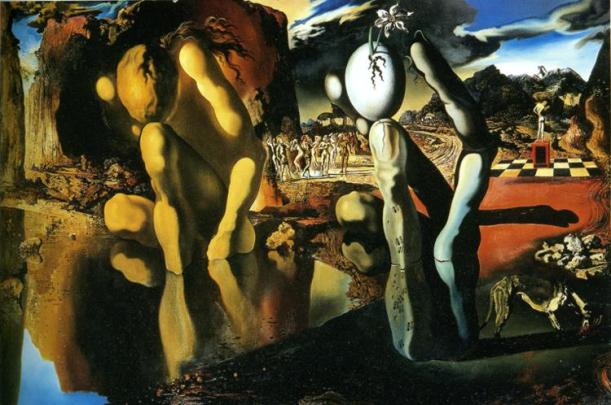
Politics Between Narcissism and Negativity

2016-3 Tomsic - salvador-dali-the-metamorphosis-of-narcissus.jpeg

What is the link between desire and exploitation, and what does it mean for political thought?

14 Mar 2016
6:00pm – 7:30pm
137a, Richard Hoggart Building

One of the earliest discoveries of psychoanalysis concerned the intimate relation of the social structures and the unconscious mechanisms. Jacques Lacan later reframed this connection by speaking of homology between political and libidinal economy. In this way, he indicated that psychoanalysis significantly widened the space, in which critical thought and emancipatory politics should intervene in order to intensify the possibilities of a social change. The talk will begin by discussing two concepts, which demonstrate a wide-reaching link between Marx and Freud’s critical projects, before passing on to more general examination of the link between libidinal bonds and mechanisms of exploitation.

Samo Tomšic is the author of The Capitalist Unconscious: Marx and Lacan, and is currently research assistant in the interdisciplinary cluster “Image Knowledge Gestaltung” at the Humboldt University in Berlin.

All welcome. No need to book.


Leave a comment

Benjamin and the Literary: Romantic Forms

WB Romantic Forms copy.jpg

A Walter Benjamin London Research Network conference of new work on Benjamin’s doctoral thesis on Romanticism, followed by a workshop on its most influential interpretations.

11 Mar 2016
10:00am – 6:00pm
302, Hatcham House (St James 19)

Benjamin’s doctoral dissertation, The Concept of Criticism in German Romanticism, has long functioned not only as a lens through which to synthesize the theories of art and knowledge in early Romanticism, but also as a cornerstone for understanding Benjamin’s own theories and practices of criticism. In harnessing his affirmation of criticism’s ability to unfold the potential immanent to works of art, such readings proffer upon the dissertation an undeniable political and historical force. Departing from ‘the literary’ both as a conceptually privileged mode of expression and as a configuration of linguistic experience, this workshop brings together emerging scholars with the aim of directing attention to under-analyzed aspects of Benjamin’s early work on criticism and critique, and to the possible articulations of politics and history contained therein. Presentations will focus on: the relation between criticism, philosophy and literature; irony; the afterlives of Benjamin’s dissertation; allegory and the Baroque. This will be followed by a workshop on the dissertation and selected readings.

Conference website


Leave a comment

From a Radical Philosophy Dossier on Property, Power, Law, drawn from the Powers and Limits of Property workshop:

Patent as credit: When intellectual property becomes speculative

Hyo Yoon Kang

Intellectual properties, the various kinds of which are known as patents, copyright and trademarks, could be regarded as central techniques of accumulation in contemporary capitalism, if immaterial knowledge is indeed what now crucially drives accumulation in a ‘knowledge economy’ or ‘creative industries’. [1] In such a process of value generation and accumulation, it is precisely the law of intellectual property that allows certain kinds of knowledge to be repackaged and transformed into units of appropriation, transfer and commodification. But how exactly does this process occur?

Continue reading here

Disaggregating primitive accumulation

Robert Nichols

For nearly 150 years now, critical theorists of various stripes have attempted to explicate, correct and complement Marx’s discussion of the ‘so-called’ primitive accumulation of capital provided in Part Eight of the first volume of Capital. This is perhaps especially true of Marxism in the English-speaking world. Whereas French and German traditions have tended to focus more on the formal categories of Capital,anglophone debates have attended more closely to Marx’s historical-descriptive account, perhaps due to the privileged role that England plays in the historical drama staging the bourgeois revolt against feudalism, the early emergence of capitalist relations and subsequent industrial revolution. The enclosures of the English commons and transformation of the rural peasantry into an industrial workforce serve, after all, as the primary empirical referents from which Marx derives his conceptual tools. From Paul Sweezy and Maurice Dobb in the 1950s, to Christopher Hill, C.B. Macpherson and E.P. Thompson in the 1960s, to Perry Anderson and Robert Brenner in the 1970s, these ‘transition debates’ have focused on the accuracy and adequacy of Marx’s history of early modern England.

Continue reading here


Race, real estate and real abstraction

Brenna Bhandar and Alberto Toscano

The crises and mutations of contemporary capitalism have rendered palpable Marx’s observation according to which in bourgeois modernity human beings are ‘ruled by abstractions’. The processes of financialization animating the dynamics of the 2007–8 crisis involved the violent irruption into the everyday lives of millions of a panoply of ominous acronyms (ABSs, CDOs, SIVs, HFT, and so on), indices of highly mathematized strategies of profit extraction whose mechanics were often opaque to their own beneficiaries. At the same time, this process of financialization was articulated to the most seemingly ‘concrete’, ‘tangible’ and thus desirable use and exchange value available to the citizens of so-called advanced liberal democracies: the home. This is a site, a social relation, that as Ferreira da Silva and Chakravartty have noted encompasses the ‘juridical, political and economic’, thus serving as a lived material synthesis of the three main axes of modern thought.

Continue reading here


Leave a comment

Giorgio Agamben’s Political Paradigm. Notes on Stasis.

A Contribution by Alberto Toscano (based on CPCT’s “The Ends of Homo Sacer” event from November 2015) to Homo Sacer: A Blog Series at Stanford University Press. 


Read the full article here

Excerpt: From the vantage of the overall montage of the Homo Sacer series, the slim volume Stasis: Civil War as a Political Paradigm would appear to be at once peripheral and interstitial. Unlike any of the other volumes, it consists of two public lectures, rather than a newly crafted text. These lectures were delivered in October 2001 at Princeton, giving their reference to global terrorism a curiously diffracted and belated, though topical, echo. Stasis is situated between State of Exception (2.1) (a concept that is explicitly, if briefly, tied to civil war), and The Sacrament of Language (2.3) and a decimal point away from The Kingdom and the Glory (2.4), with which it entertains more tenuous links: its treatment of the thresholds between oikos and polis prepare possible interrogations on what becomes of these with the Patristic introduction of oikonomia, of divine management, while the tantalising foray into Hobbesian eschatology opens up a different avenue into a critique of the theocratic imagination, and resonates with a passing mention of Hobbes on the oath in Sacrament. Stasis was also published in Italian a few months after the final volume with which Agamben “abandons” the project, The Use of Bodies.


Leave a comment

The Ends of Homo Sacer.

A review in Postmodern Culture of a Roundtable discussion on the work of Giorgio Agamben.

By Christopher Law (CCS/CPCT, graduate affiliate) 


Read the full article here

Excerpt: On November 10, 2015 a group of four scholars of Giorgio Agamben’s work gathered at Goldsmiths, University of London for a roundtable organized by the college’s recently formed Centre for Philosophy and Critical Thought (CPCT). Contributing to the event, and representing a diverse array of interests in Agamben’s work, were Jessica Whyte, Benjamin Noys, Jason E. Smith and Alberto Toscano (who, alongside the roundtable chair Julia Ng, acts as co-director of the CPCT). The event was dubbed “The Ends of Homo Sacer,” a title whose most obvious motivation was the recent publication of Agamben’s Stasis: Civil War as a Political Paradigm and of L’uso dei corpi (recently published in English as The Use of Bodies). The former book, originally delivered as two lectures in October 2001, slots into an earlier position in Agamben’s nine-book Homo Sacer series, whilst the latter marks its ostensible termination, if not its completion. As is well known, the series has been published out of the order envisioned by Agamben himself (a confusion to which the delayed publication of Stasis adds, since it displaces a spot previously accorded to The Kingdom and the Glory). Both the elusive ordering of the project and the question of its conclusion provided food for thought throughout the evening; neither problem, needless to say, attained definitive closure.


Leave a comment

The Ends of Homo Sacer – A Roundtable Discussion on the Work of Giorgio Agamben

Nov10Agamben.jpg

Giorgio Agamben is an Italian philosopher best known for his work investigating the concepts of the state of exception, form-of-life (borrowed from Ludwig Wittgenstein) and homo sacer.

10 Nov 2015
5:00pm – 7:30pm
Lecture Theatre, Ben Pimlott Building

With the publication of L’uso dei corpi (The Use of Bodies) and the short volume Stasis, Giorgio Agamben’s Homo Sacer series, comprising 9 books, has been brought to a close – if not, by his own lights, an actual completion. This roundtable will take up the task of an initial critical assessment of this remarkably influential project by homing in on a number of salient and thorny themes across its multiple volumes, with a particular focus on the interweaving and displacement of politics, ontology and anthropology in Agamben’s work. Among the themes under consideration will be the question of “(global)civil war,” the place of slavery in Agamben’s understanding of biopolitics, the “apocalyptic tone” in his philosophy, and the figure of surplus populations.

With Benjamin Noys (University of Chichester), Jason E. Smith (Art Center College of Design), Alberto Toscano (Goldsmiths), Jessica Whyte (University of Western Sydney)

For more information on the Centre for Philosophy and Critical Thought, please visit our web page:http://www.gold.ac.uk/cpct/


Leave a comment

Werner Hamacher – “Image and Time” (Walter Benjamin London Research Network)

hamacher_poster_mail.jpg

One of the world’s seminal readers of Walter Benjamin inaugurates new philosophy research network with a workshop on Benjamin’s understanding of the image.

23 Oct 2015
10:00am – 5:00pm
Room D111, Granary Building, Central Saint Martins

The day will be split into four sessions, each devoted to a selection of short texts and excerpts. Texts under discussion will be distributed ahead of the workshop in German and English.

Participation in the workshop is limited. Please register your interest by sending a letter of intent and (in the case of PhD students) a thesis abstract by Oct 5, 2015 to j.ng [at] gold.ac.uk, j.cohen [at] gold.ac.uk, and a.benjamin [at] kingston.ac.uk.

Werner Hamacher is a professor emeritus of comparative literature at the Goethe-Universität Frankfurt am Main, and a professor of Philosophy and Literary Theory at the European Graduate School in Saas-Fee, Switzerland. (Frankfurt am Main) http://www.egs.edu/faculty/werner-hamacher/biography/

The Centre for Philosophy and Critical Thought (CPCT) at Goldsmiths, University of London collaborates with the Department of English and Comparative Literature at Goldsmiths, the London Graduate School at Kingston University, and Central Saint Martins, University of the Arts London, in a network of research and scholarly exchange related to the work of Walter Benjamin. The network brings together scholars and research students in the London area, and facilitates the exchange of advanced, philosophical and literary-theoretical research on Benjamin between the UK, other parts of Europe, and around the world. The network is co-chaired by Julia Ng (co-director of CPCT), Josh Cohen (English and Comparative Literature), and Andrew Benjamin (LGS Kingston / Monash).

The network hosts an annual lecture series; and text-based workshops that intersperse short formal presentations and close textual analysis of one or several key writings by Benjamin along a chosen theme.


The Centre for Philosophy and Critical Thought (CPCT) is a new centre for philosophical inquiry at Goldsmiths. For further information please visit http://www.gold.ac.uk/sociology/research-centres/cpct/

To sign up for announcements of upcoming events, please subscribe to our mailing list at:http://www.jiscmail.ac.uk/cpct-announce
?

www.gold.ac.uk/…/walter-benjamin/


1 Comment

Werner Hamacher: “Now: Time” (Walter Benjamin London Research Network)

hamacher_poster_mail.jpg

One of the world’s seminal readers of Walter Benjamin inaugurates new philosophy research network with a talk on Benjamin’s idea of historical time.

22 Oct 2015
5:00pm – 7:00pm
137a, Richard Hoggart Building

Werner Hamacher is a professor emeritus of comparative literature at the Goethe-Universität Frankfurt am Main, and a professor of Philosophy and Literary Theory at the European Graduate School in Saas-Fee, Switzerland. (Frankfurt am Main) http://www.egs.edu/faculty/werner-hamacher/biography/

The Centre for Philosophy and Critical Thought (CPCT) at Goldsmiths, University of London collaborates with the Department of English and Comparative Literature at Goldsmiths, the London Graduate School at Kingston University, and Central Saint Martins, University of the Arts London, in a network of research and scholarly exchange related to the work of Walter Benjamin. The network brings together scholars and research students in the London area, and facilitates the exchange of advanced, philosophical and literary-theoretical research on Benjamin between the UK, other parts of Europe, and around the world. The network is co-chaired by Julia Ng (co-director of CPCT), Josh Cohen (English and Comparative Literature), and Andrew Benjamin (LGS Kingston / Monash).

The network hosts an annual lecture series; and text-based workshops that intersperse short formal presentations and close textual analysis of one or several key writings by Benjamin along a chosen theme.

The Centre for Philosophy and Critical Thought (CPCT) is a new centre for philosophical inquiry at Goldsmiths. For further information please visit http://www.gold.ac.uk/sociology/research-centres/cpct/

To sign up for announcements of upcoming events, please subscribe to our mailing list at:http://www.jiscmail.ac.uk/cpct-announce

www.gold.ac.uk/…/walter-benjamin/