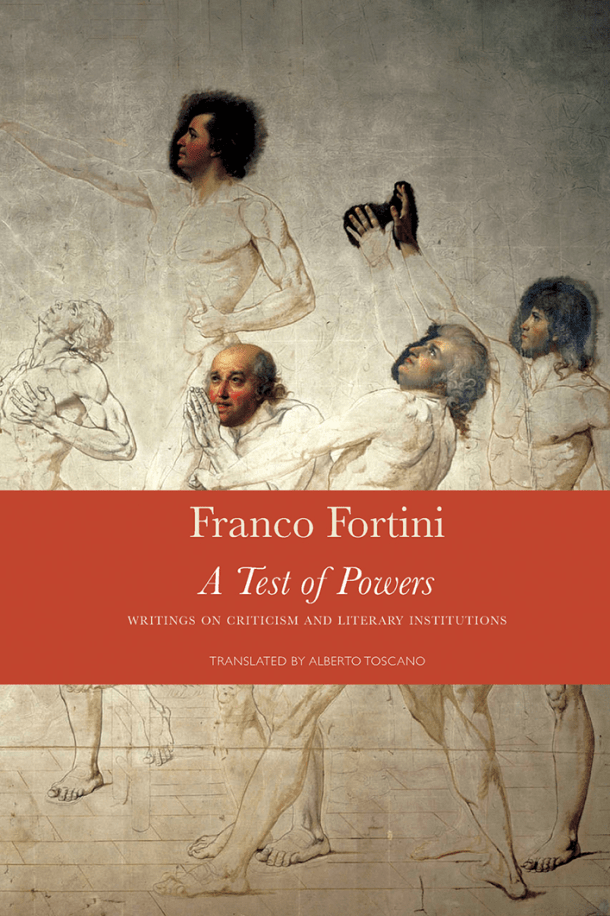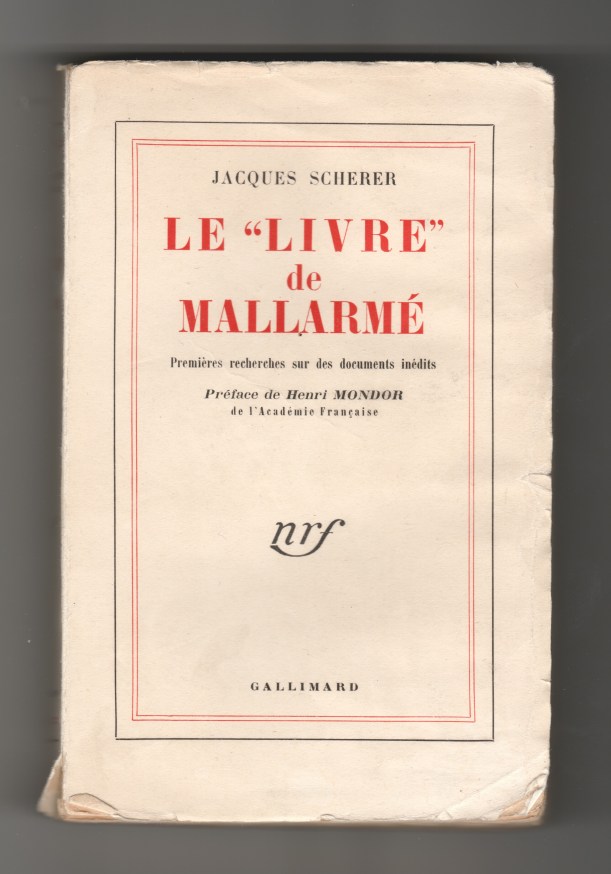
To mark the publication of Franco Fortini’s essay collection A Test of Powers, edited and translated by Alberto Toscano, we present a short symposium on intellectuals and anti-fascism. Continue reading

To mark the publication of Franco Fortini’s essay collection A Test of Powers, edited and translated by Alberto Toscano, we present a short symposium on intellectuals and anti-fascism. Continue reading →

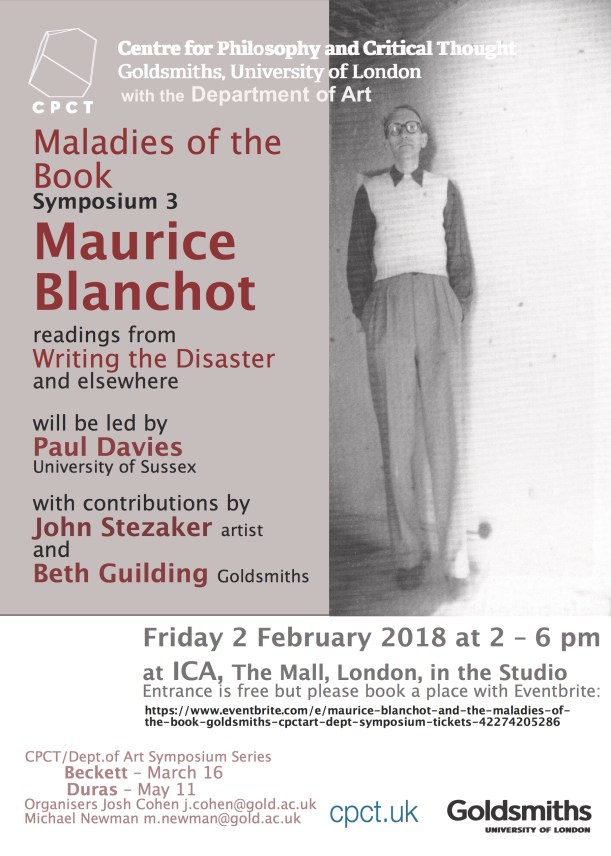
A symposium on Friday February 2nd at 2pm – 6pm
The ICA, The Mall, London in the Studio
Starting from his late reflections on passivity in The Writing of the Disaster, we turn to the work of Maurice Blanchot to develop our ongoing exploration of writing as impossibility and madness, and extend it to a consideration of the image. Beginning with a workshop on passages from Writing the Disaster, and Blanchot’s texts ‘Reading’ and ‘The Narrative Voice’, we will explore ideas of a radical passivity, reading situated before comprehension, the neutral, and the image as cadaver.
Paul Davies (University of Sussex) will guide the reading on passivity and reading.
John Stezaker (artist) will talk on the image, for which the reading will be ‘Two Versions of the Imaginary’.
Beth Guilding (Goldsmiths, University of London) will present a paper ‘”We do not come to the end with age”: Blanchot’s last word’, for which the reading will be Blanchot’s text ‘Who?’ from Who Comes After the Subject.
Attendance is free, but please reserve a place in advance on Eventbrite:
Copies of the readings will be provided to those who book on Eventbrite.
Organised by Josh Cohen j.cohen@gold.ac.uk and Michael Newman m.newman@gold.ac.uk for the Centre for Philosophy and Critical Thought with the Department of Art, Goldsmiths, University of London.

11 January 2018
5-7pm
Richard Hoggart Building (RHB) Room 144
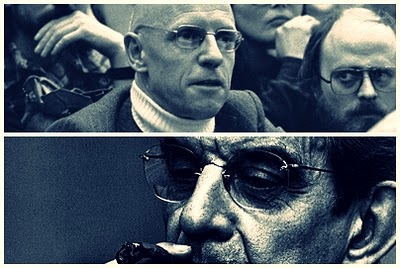
This talk will focus on Foucault’s 1969 article ‘What Is an Author?’ and on Lacan’s comments on it. Although Lacan highlights the links between Foucault’s notion of the author and the subject of the unconscious as conceived by psychoanalysis, it will be argued that Lacan’s materialist stance is ultimately incompatible with Foucault’s fundamentally vitalist ontology.
Lorenzo Chiesa is Director of the Genoa School of Humanities and Visiting Professor at the European University at St Petersburg. He also teaches at the Freud Museum, London. Previously, he was Professor of Modern European Thought at the University of Kent, where he founded and directed the Centre for Critical Thought. His most recent works include The Not-Two: Logic and God in Lacan (MIT Press, 2016), The Virtual Point of Freedom (Northwestern UP, 2016), and Lacan and Philosophy (Re.press, 2014).
All welcome.


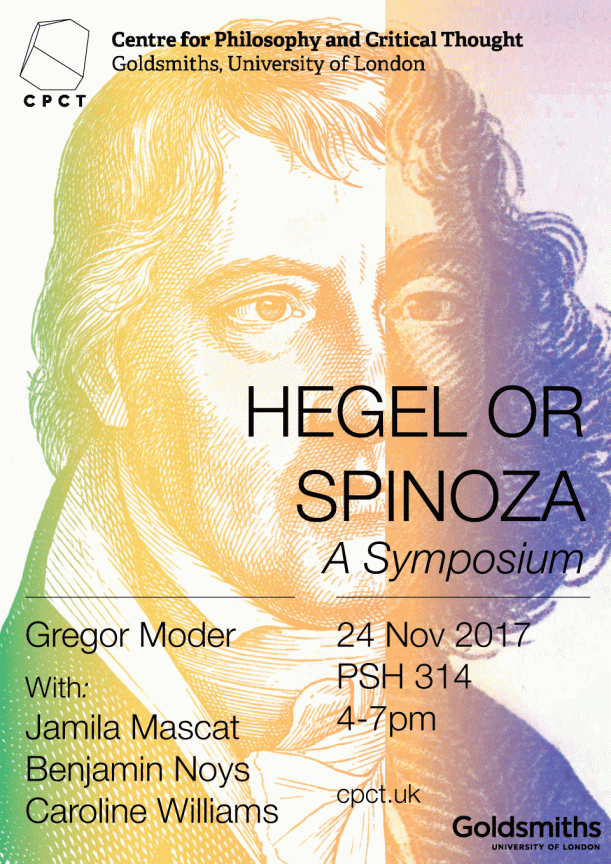
Spinoza’s philosophy, especially in its contemporary readings inspired by Deleuze and Althusser, is a radical choice for being without gaps or imperfections, for a substance that has no use for negativity, for a production of differences which are not simple logical contradictions. As such, it stands in opposition to all thought which follows Hegel’s equally radical choice for productive power of the negative, of nothingness itself, to any claim that non-being is creative. It seems that contemporary materialism should either choose one or the other, Spinoza or Hegel, Spinoza against Hegel. But is that really so? Perhaps one of the major tasks of materialism today is precisely the task of thinking their encounter in its historical, ontological, and political implications.
Participants
Gregor Moder (Ljubljana)
Benjamin Noys (Chichester), author of The Persistence of the Negative
Jamila Mascat (Utrecht), author of Hegel a Jena: La critica dell’astrazione
Caroline Williams (Queen Mary), author of Contemporary French Philosophy
Modernity and the Persistence of the Subject


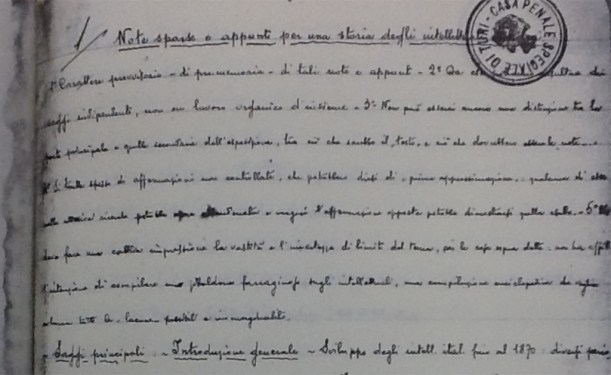
A reading group on Gramsci and Philosophy hosted by the Italian Cultural Institute and moderated by Alberto Toscano (co-director, CPCT)
Tuesday 31 October 2017
Istituto Italiano di Cultura
39 Belgrave Square
SW1X 8NX
4-5.45pm
On the occasion of the first exhibition of Gramsci’s prison notebooks (Quaderni del carcere) outside of Italy, we will be discussing Part III, Section 1 of the English-language translation Selections from the Prison Notebooks, ‘The Study of Philosophy’ (ed. and trans. Quentin Hoare and Geoffrey Nowell Smith, London: Lawrence & Wishart, 1971), pp. 321-377 (with reference to the original Italian of the Quaderni).
The reading group is free and open to all but due to limited numbers you must register by emailing a.toscano@gold.ac.uk