The Centre for Philosophy and Critical Thought, Goldsmiths University of London

Research Centre run jointly between the Departments of Sociology and English and Comparative Literature at Goldsmiths University, London


Leave a comment

Announcement: phi-net, an early career network for philosophy and critical theory funded by CHASE-AHRC

We are pleased to announce the establishment of phi-net, an early career network for philosophy and critical theory funded by CHASE-AHRC and co-hosted by CPCT and the Birkbeck Institute for the Moving Image (BIMI).

As disciplines whose sources and references point to contributions to wider intellectual histories, philosophy and critical theory continue to influence and reflect interdisciplinarity in fields across the arts and the humanities. The CHASE Early Career Network for Philosophy and Critical Theory (phi-net) provides a forum for engaging with and preserving the spirit of this collective exchange with a view to adapting and incorporating perspectives from its guests and participants and to supporting ongoing interdisciplinary research in doctoral and early-career researcher communities.

Provocation for 2026-27: Against Frictionlessness

phi-net’s programme for AY 2026-27 considers friction and frictionlessness through three lenses: ecology, capital, and poetics. Taking up objects, super-objects, flesh, spectres, parasites, diamonds, shipping containers, seams, data, rhetoric, ground, and the other, we ask: how can we grasp friction as an affective, aesthetic, or ontological category? And how has its classification evolved up to our historical-critical present? How does philosophy and critical theory account for desires for and aversions to friction? How does friction(lessness) figure in our political ideals and alternatives, in our hopes and fears? Collaborators on our programme so far include Prof. Ken McMullen (Kingston), Prof. Oscar Guardiola-Rivera (Birkbeck) and Prof. Esther Leslie (Birkbeck), with more to be announced soon.

phi-net’s programme provides an opportunity for training and development for all CHASE (Consortium for the Humanities and the Arts South-east England) researchers seeking to adopt topics and methods in philosophy and critical theory into their research, including researcher-led workshops, film screenings, and an annual postgraduate conference. Our programme is organised in collaboration with the Centre for Philosophy and Critical Thought (CPCT) at Goldsmiths, University of London and the Birkbeck Institute for the Moving Image (BIMI). We are supported by the CHASE doctoral training partnership.

phi-net is co-coordinated by Anna Titov (University of East Anglia, Philosophy), Grace Marshall (Birkbeck, History) and Jack Morson (Goldsmiths, Literary and Critical Theory).

To join our mailing list, or to express interest in contributing to the Network’s activities, please contact: chasephinet@gmail.com

Leave a comment

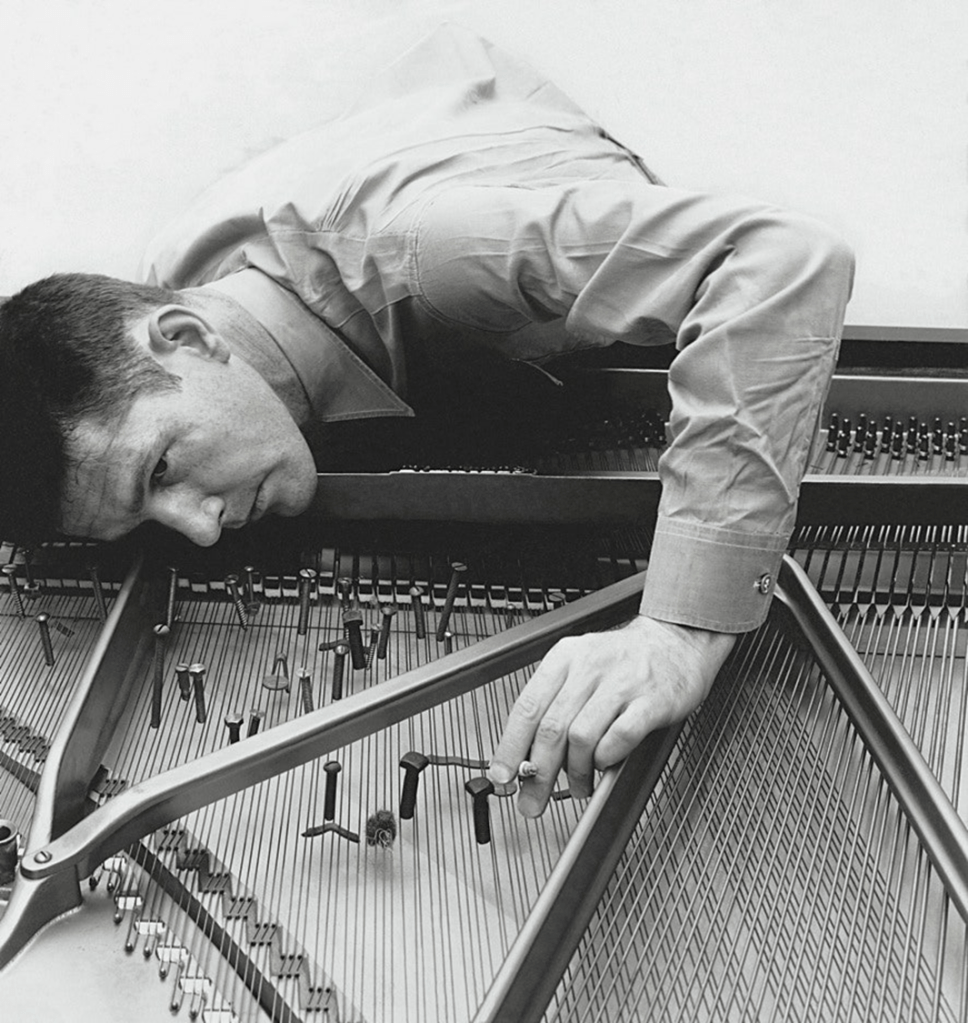
Iain Campbell, ‘John Cage, Gilles Deleuze, and the Practice of Experimentation’ (Friday, 8th May, 5pm, in person and online)

a special session of our CPCT Research Seminar 2025-26
‘Music and Philosophy’

Time: Friday, 8 May 2026, 5:00-7:00 pm UK time.
Venue: RHB 138 and online

Zoom registration: https://gold-ac-uk.zoom.us/meeting/register/mUYqPLVRQO6eqQdsp534BQ

Free and open to all.

About the talk:

In the twentieth century it became common to speak of experimentation beyond its traditional domain of scientific research, with discourses on the ‘experimental’ appearing across the arts and humanities. In the twenty-first century, ‘experimentation’ has been widely theorised as a means of performing interdisciplinary and transdisciplinary research. However, with this expansion across domains, experimentation has become a sometimes diffuse and vague notion. Here I approach this issue through two figures who have come to stand for the imperative to experiment: the composer John Cage and the philosopher Gilles Deleuze.

Cage, as an experimental composer, is characterised by his embrace of the uncertain and unforeseen. Chance procedures, the incorporation of unintended sound, and the development of new notational schemes are among the means he adopted in order to break down conventional models of composition, performance, and listening. Deleuze, as an experimental philosopher, is likewise taken to value creativity and transformation, a ‘becoming’ that arises through a thorough challenge to any and all hierarchies, dualisms, and foundations. Thought and practice are not driven by pre-given norms or grounded in solid foundations, but rather proceed from the problematisation of encounters that exceed recognition or categorisation.

Yet ideals of experimentation and the practice of experimentation do not always match up: critics have argued that anti-method principles such as Cage’s ‘purpose to remove purposes’ bring the risk of obscuring where control and domination are still active; that the uncertainty the experimenter proclaims masks a deeper certainty. The wager of my project then, is that by staging an encounter between these two figures, and the two domains they occupy, we can reach a new understanding of what it means, has meant, and can mean to experiment in, between, and beyond music and philosophy.

Speaker bio:

Iain Campbell is a writer and researcher based in Glasgow, Scotland. He works on topics across philosophy, music, sound studies, and modern and contemporary art, with a particular interest in continental philosophy and experimental music. His academic writing has been published in venues including parallax, Continental Philosophy Review, and Contemporary Music Review, and he has had art criticism published in venues including Burlington Contemporary. His most recent academic position was as Lecturer in Modern and Contemporary Art History at the University of Edinburgh, and he has also worked at the University of Brighton and the University of Dundee. His book John Cage, Gilles Deleuze, and the Practice of Experimentation is forthcoming with Edinburgh University Press.