


Gabriele Pedullà, Machiavelli for Brexiteers (May 16)
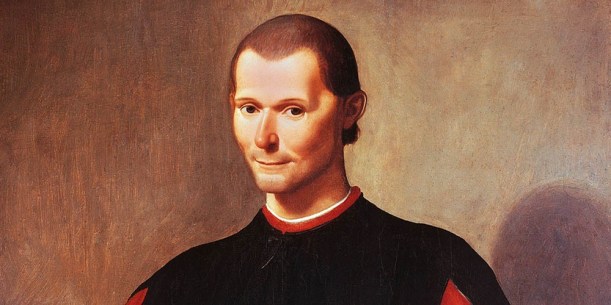
‘Giving the Foreigners Citizenship’, or, Machiavelli for Brexiteers
Gabriele Pedullà
16 May
5-7
Professor Stuart Hall Building
Room LG01
A long and authoritative philosophical tradition, starting with Aristotle, asserted that cities have to be especially careful with foreigners, granting them citizenship only in exceptional cases, because the afflux of newcomers risks resulting in a threat to political concord and harmony. Against this opinion, in his Discourses on Livy Machiavelli offered a completely different reasoning: modern states should follow the model of Rome instead, where subjected populations and immigrants from abroad were constantly incorporated into the civic body, making the republic stronger, even if this process inevitably fuelled social conflicts. A lesson that is still valid today?
Gabriele Pedullà is associate professor of Italian Literature at the University of Roma Tre and has been visiting professor at Stanford, UCLA, the Ecole Normale Supérieure (Lyon), and Harvard. He is the author of In Broad Daylight: Movies and Spectators after the Cinema, Machiavelli in Tumult, and the novel Lame [Blades].
The Dash— A Workshop with Rebecca Comay and Frank Ruda (May 25)
10am-1pm
25 May 2019
Room RHB 144
Richard Hoggart Building
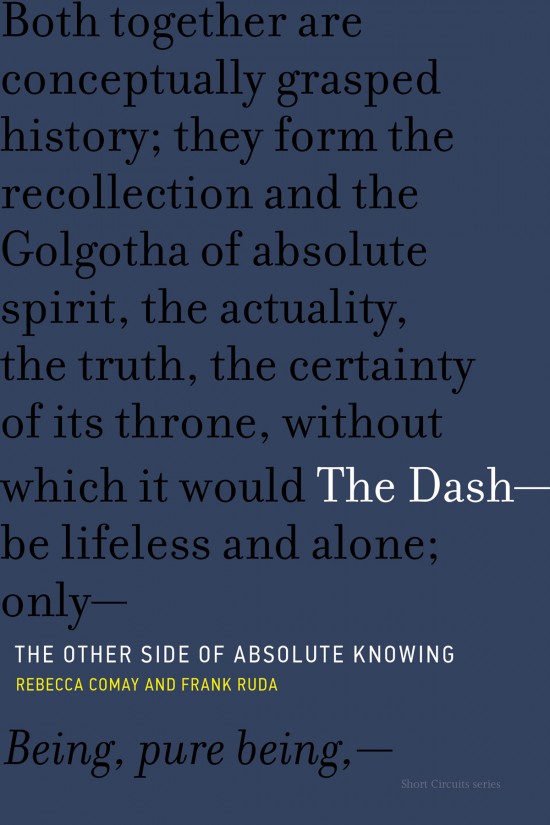
In The Dash—The Other Side of Absolute Knowing (MIT Press, 2018), Rebecca Comay and Frank Ruda present a reading of Hegel’s most reviled concept, absolute knowing. Their book sets out from a counterintuitive premise: the “mystical shell” of Hegel’s system proves to be its most “rational kernel.” Hegel’s radicalism is located precisely at the point where his thought seems to regress most. Most current readings try to update Hegel’s thought by pruning back his grandiose claims to “absolute knowing.” Comay and Ruda invert this deflationary gesture by inflating what seems to be most trivial: the truth of the absolute is grasped only in the minutiae of its most mundane appearances. What if everything turns out to hinge on the most inconspicuous and trivial detail—a punctuation mark?
Rebecca Comay is a Professor of Philosophy and Comparative Literature at the University of Toronto
Frank Ruda is a Senior Lecturer in Philosophy at the University of Dundee
Places are limited to so please register ahead of time with a.toscano@gold.ac.uk
Chukrov and Tomsic on Marxism and Psychoanalysis (May 31)
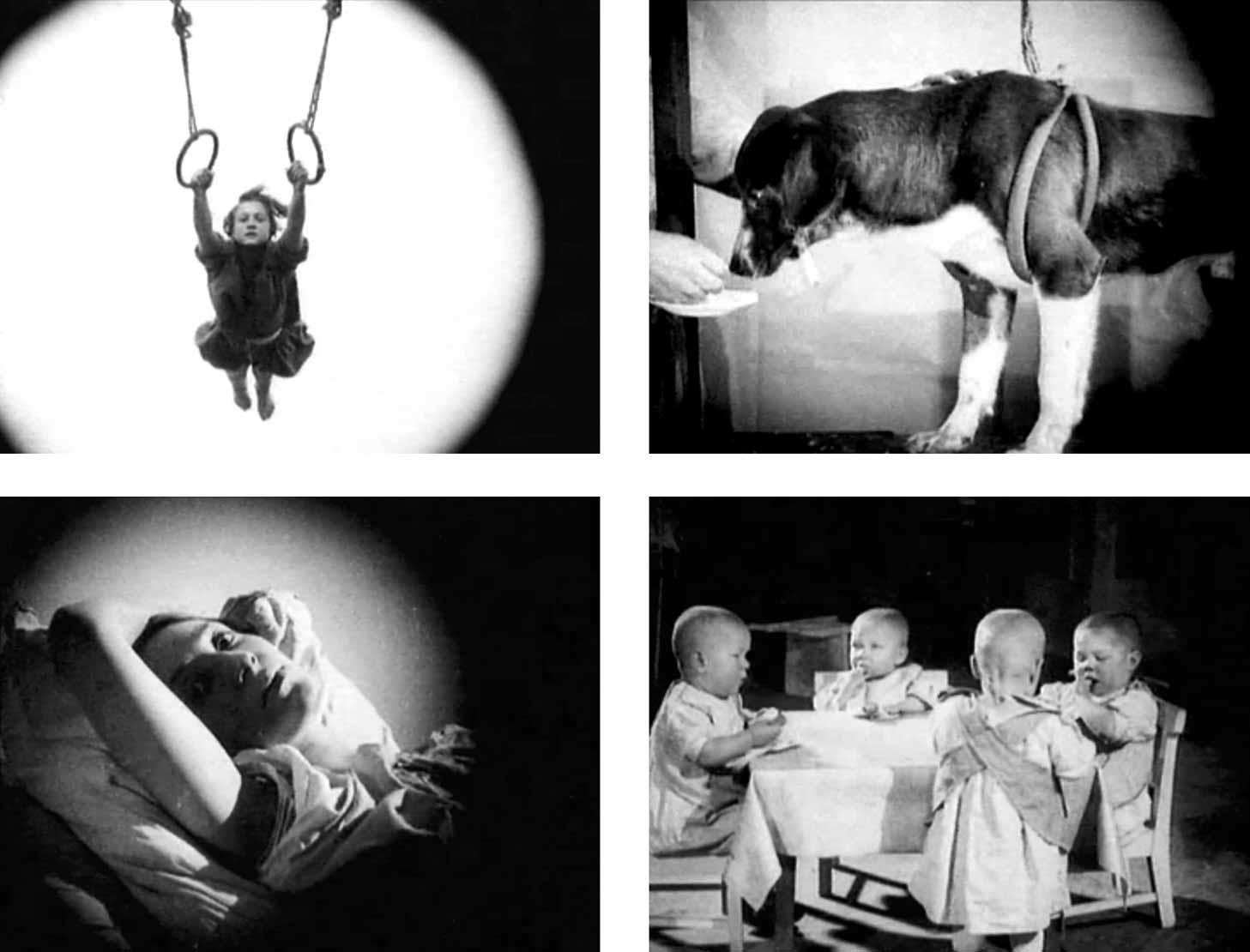
Marxism and Psychoanalysis: Alliance or Conflict?
From Soviet Psychology to the Present
Samo Tomsic and Keti Chukhrov
31 May 2019
4-7pm
Professor Stuart Hall Building Room PSH 305
The critique of psychoanalysis in Soviet Marxist philosophy and psychology was predicated on the secondary role of the unconscious and hence of ‘psychics’, in the construction of the social subject. Key studies such as Voloshinov’s Freudianism (1976) and Marxism and the Philosophy of Language (1929) and Leontiev’s Activity and Consciousness (1977), insisted that what functions as lack and alienation in psychoanalysis are in fact socio-economic categories and hence prone to dissolution under communism, having no stable ontology of their own. Consequently, the unconscious is simply that part of consciousness, which has not yet acquired awareness; indeed consciousness is nothing but an assemblage of socio-cognitive activity and labour, and therefore precisely an extension of social production. This classical mode of Marxist argumentation was subject to severe critique in the 1970s such as Lyotard’s Libidinal Economy (1974), Guattari’s Machinic Unconscious (1979) and Castoriadis’s The Imaginary Institution of Society (1975). In these texts desire and the unconscious were claimed as the irretrievable force of capitalism’s libidinal and phantasmatic nature. Meanwhile Lacan’s critique of philosophy’s reliance on consciousness in the 1960s was even stricter, calling the transparently rational subject a fatal error of philosophy. What, therefore, is left of the Soviet Marxist critique of psychoanalysis? This symposium will explore this question, specifically through a discussion of subjectivity and the social function of language, from these two drastically opposed standpoints. Continue reading
CHASE-funded screening event ‘A Berlin Childhood around 1900 – A Project in Progress’
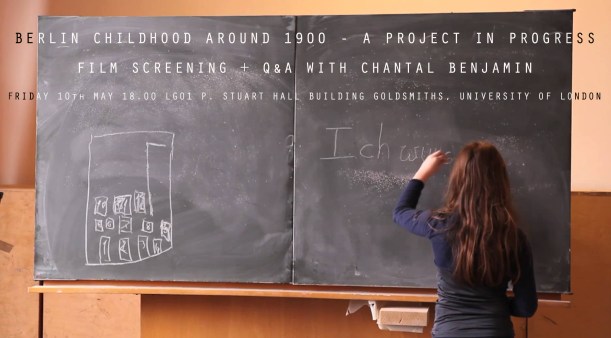
CHASE-funded screening event ‘A Berlin Childhood around 1900 – A Project in Progress’
Friday, May 10 18:00 – 21.00
Professor Stuart Hall Building LG01 – Goldsmiths, University of London
Attendance is free but registration is required, please register here:
https://www.chase.ac.uk/film-screening-berlin-childhood-around-1900
Goldsmiths Annual Philosophy Lecture: Christoph Menke (Frankfurt), “The Critique of Law and the Law of Critique” (29 May 2019)
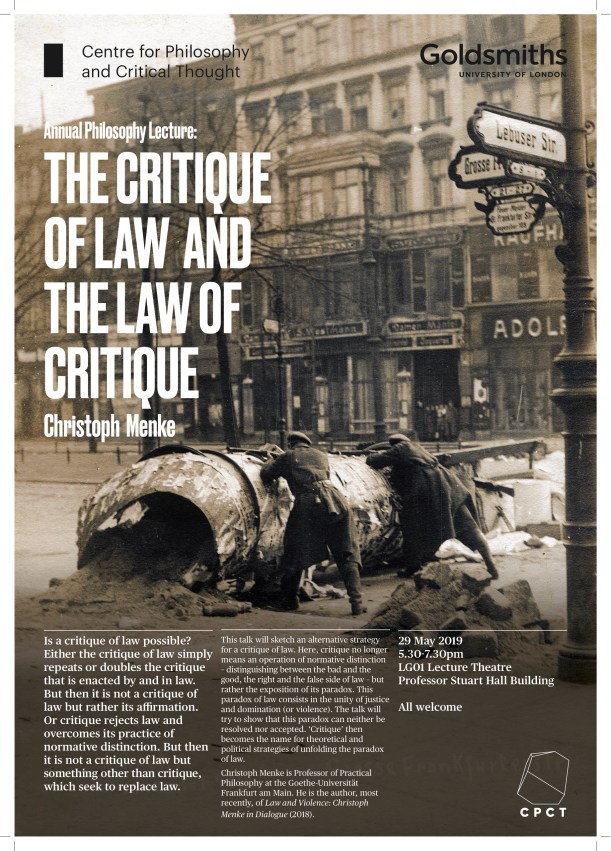
CPCT cordially invites you to the 2nd Goldsmiths Annual Philosophy Lecture:
Christoph Menke (Frankfurt)
“The Critique of Law and the Law of Critique”
Wednesday, 29 May 2019
5:30 – 7:30 pm
LG01 Lecture Theatre
Professor Stuart Hall Building
Programme: Sex, Race, Nation, Humanity: Derrida’s Geschlecht III (April 8-9, 2019)

Sex, Race, Nation, Humanity: Derrida’s Geschlecht III
A Conference on a Newly Re-discovered Text
April 8-9, 2019
Richard Hoggart Building 137a, Goldsmiths, University of London
This two-day conference focuses on a recently discovered text by the late Franco-Algerian philosopher Jacques Derrida. Geschlecht III, rediscovered in the Derrida archive and newly published in French (forthcoming in English), is the “missing” installment in Derrida’s four-part series on Martin Heidegger and the German word Geschlecht (meaning, among other things, “sex,” “race,” and “species”). Geschlecht III presents us with one of Derrida’s most sustained engagements with Heidegger, a meticulous reading of what he will call Heidegger’s “national-humanism”: the nationalistic undercurrent in Heidegger’s thought that posits German and Germany as the privileged media through which to think the essence of the human and its relationship to the fate of the West.
PROGRAMME
Sex, Race, Nation, Humanity: Derrida’s Geschlecht III (April 8-9, 2019)
Sex, Race, Nation, Humanity: Derrida’s Geschlecht III
A Conference on a Newly Re-discovered Text
April 8-9, 2019
Richard Hoggart Building 137a, Goldsmiths, University of London
With Geoffrey Bennington — Katie Chenoweth — Josh Cohen — Paul Davies — Simon Glendinning — Tobias Keiling — Simon Morgan Wortham — Adam Rosenthal — Mauro Senatore — Elina Staikou — Rodrigo Therezo — Lynn Turner — Naomi Waltham-Smith — Sarah Wood
This two-day conference focuses on a recently discovered text by the late Franco-Algerian philosopher Jacques Derrida. Geschlecht III, rediscovered in the Derrida archive and newly published in French (forthcoming in English), is the “missing” installment in Derrida’s four-part series on Martin Heidegger and the German word Geschlecht (meaning, among other things, “sex,” “race,” and “species”). Geschlecht III presents us with one of Derrida’s most sustained engagements with Heidegger, a meticulous reading of what he will call Heidegger’s “national-humanism”: the nationalistic undercurrent in Heidegger’s thought that posits German and Germany as the privileged media through which to think the essence of the human and its relationship to the fate of the West.
Click here for the programme and abstracts.
Free and open to all.
Contact: j.ng [at] gold.ac.uk
CFP: Baudelaire and Philosophy: A Conference sponsored by the British Society of Aesthetics 5-6 June 2019 (deadline: 21 March 2019)
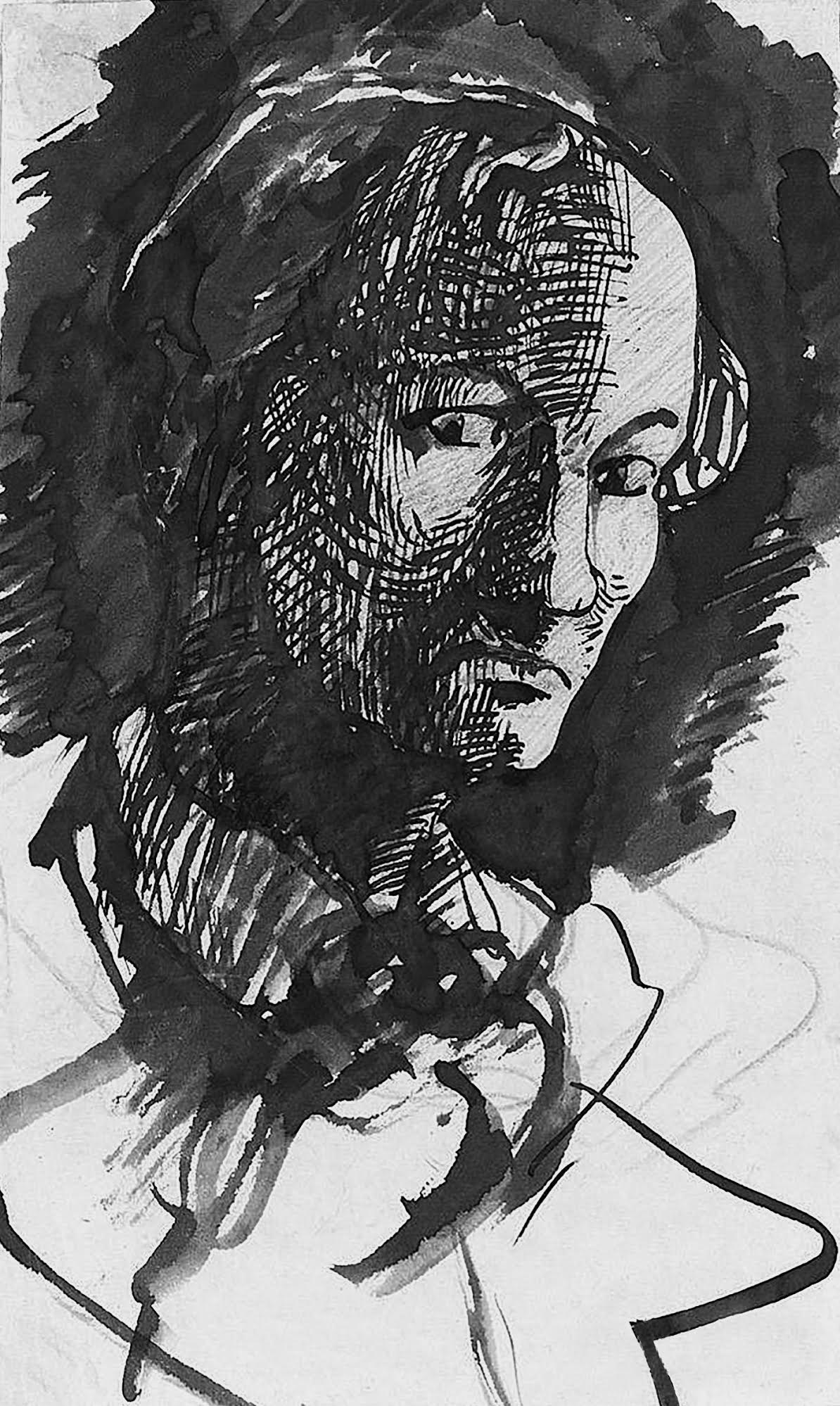
Baudelaire and Philosophy: A Conference sponsored by the British Society of Aesthetics
5-6 June 2019, Centre for Philosophy and Critical Thought, Goldsmiths, University of London and the Institut Français
CALL FOR PAPERS
Deadline for submissions: 21 March 2019
Continue reading
CFP: Benjamin’s Baudelaire — Constellations of Modernity. An AHRC CHASE Workshop for Early Career Researchers

Call for Papers
Benjamin’s Baudelaire — Constellations of Modernity
A Workshop for Early Career Researchers
Event date: Saturday, 11th May 2019
Location: Goldsmiths, University of London
Deadline for abstracts: Monday, 4th February 2019
Contact: benjaminsbaudelaire@gmail.com
In affiliation with the Centre for Philosophy and Critical Thought’s 2018–19 research seminar series on Baudelaire and Philosophy as well as the corresponding conference to be held in June 2019, a one-day workshop will offer early career researchers the chance to re-examine the conceptual and methodological implications of Walter Benjamin’s relationship to ‘The Writer of Modern Life’. The workshop will consist of several debates in relation to set reading as well as short presentations from all of the participants.

